


Where Mildew Resistance Fits in a Sailcloth Range
A sail can be designed to withstand wind, UV exposure, and repeated use. But what happens when it’s packed away damp?
For sailcloth manufacturers, performance doesn’t stop when a boat returns to the marina. Sails are exposed to moisture, salt spray and humid storage conditions. These create opportunities for mold and mildew to develop, leaving unsightly discoloration and marks on the material.
It’s a familiar problem for sailmakers and boat owners and worth considering when developing a sailcloth range.
Start With the Sailcloth Construction and Intended Use
Not all sailcloths face the same mildew challenges, and different sailcloths have different constructions, performance requirements and manufacturing processes.
For example, woven polyester generally allows greater moisture movement than film-based laminates. Laminated sailcloth can retain moisture between layers, making mildew a particular concern when sails are stored damp. Before introducing antifungal protection, manufacturers should consider three questions:
- Where is mildew most likely to become a problem? Consider the sail's intended use, moisture exposure, and typical storage conditions.
- Which part of the construction needs protection? The fibers, surface finish, coating or laminate structure may require different approaches.
- Can protection be introduced without compromising performance? Any treatment must be compatible with the material's strength, flexibility, weight, appearance and manufacturing requirements.
This is why material selection comes first. The aim isn't simply to add another feature to the specification sheet. The goal is to find an approach that solves a relevant problem while preserving the properties sailmakers depend on.
How Microban Helps Evaluate Antimicrobial Product Protection
Adding antimicrobial product protection to sailcloth sounds straightforward. Ensuring it works with the material, manufacturing process and intended application requires more consideration.
That's where Microban can help.
Microban works with manufacturers to assess whether antimicrobial product protection suits their specific material and application.
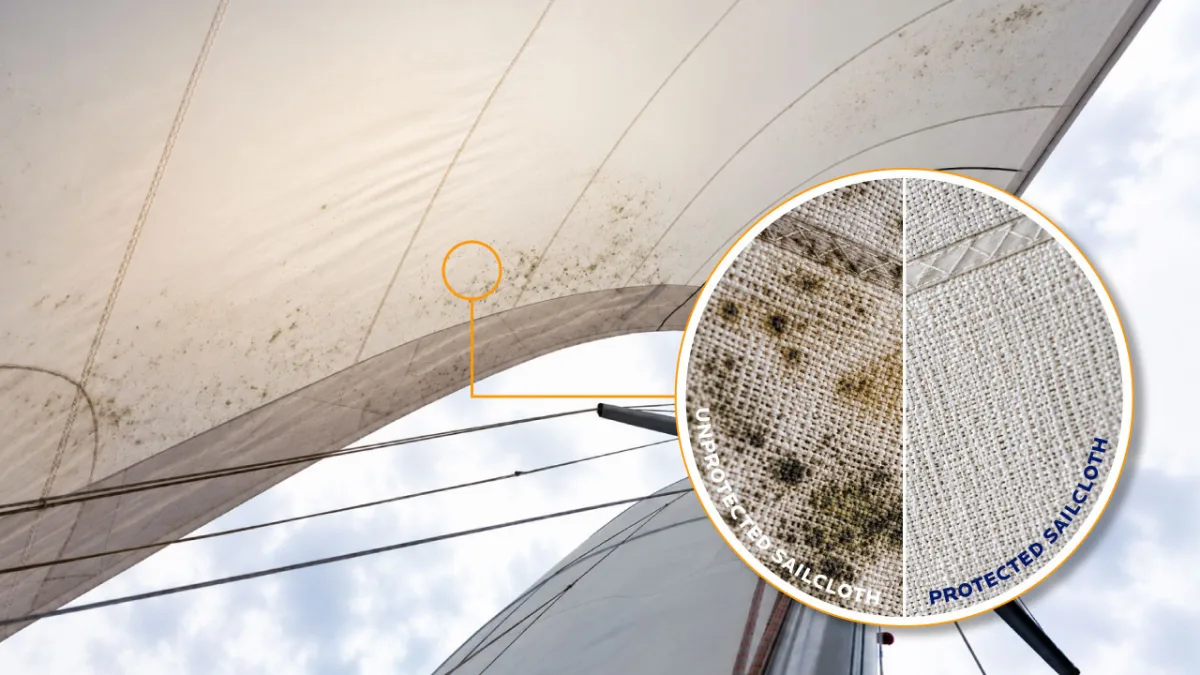
Rather than starting with a one-size-fits-all treatment, the process begins with understanding the sailcloth itself: its construction, the conditions it will encounter and the performance characteristics it must maintain.
From there, Microban can help manufacturers explore suitable technologies and evaluate how they perform.
Depending on the application, this may involve:
- Material compatibility: Assessing whether an antimicrobial technology suits the chosen fabric, coating, or construction.
- Manufacturing integration: Exploring how protection could be incorporated into an existing production process.
- Performance testing: Evaluating treated materials against relevant fungal organisms using appropriate laboratory methods.
- Claims support: Reviewing test results to establish which product protection benefits can be accurately communicated.
Microban antimicrobial technologies are designed to inhibit mold and mildew growth on treated materials. Testing must establish the performance of any specific sailcloth application.
Give Sailmakers a Product Benefit You Can Substantiate
For manufacturers, credible product differentiation starts with evidence. But the right technology partner can add even more value.
Appropriate laboratory testing can show whether treated sailcloth resists fungal growth under defined test conditions. Those results can then inform accurate product descriptions, technical specifications and sales materials.
Working with Microban brings the added value of an established, globally recognized brand in antimicrobial product protection. For manufacturers, this means more than access to proven technology and technical expertise. It also creates an opportunity to strengthen product credibility through association with a trusted name.
Where approved, Microban branding can help make that added product protection more recognizable, giving sailmakers a clear, evidence-backed benefit they can confidently communicate to customers.
It's equally important to be clear about what antifungal protection doesn't do. It doesn't make sailcloth maintenance-free, prevent all mildew in every condition or remove the need for proper cleaning, drying and storage.
With application-specific testing, it can offer an additional level of protection against mould and mildew growth on the treated material.
For sailcloth manufacturers, the opportunity is twofold: a product benefit backed by evidence and the credibility of the Microban name to help bring that benefit to market.
Frequently Asked Questions About Mildew Protection for Sailcloths
Does treating one component with antimicrobials protect every layer of a sailcloth laminate?
No, not necessarily. Treating one component doesn't automatically protect the entire laminate. Each layer needs to be considered individually, with testing to establish where the protection works and what claims can be supported.
Does antifungal protection replace proper sail cleaning, drying and storage?
No. Antifungal protection is an added benefit, not a replacement for good sail care. It helps inhibit mold and mildew growth on treated materials, but regular cleaning, thorough drying and proper storage remain essential.