
Outdoor and technical textiles are exposed to far more than moisture alone. Condensation, humidity, temperature fluctuations, airborne contaminants, organic matter, and everyday environmental exposure can all contribute to odor buildup over time.
While water-repellent and moisture-management technologies help fabrics shed water and dry more quickly, they do not address all sources of odor. Outdoor textiles are routinely exposed to environmental conditions that allow odor-causing compounds to accumulate throughout a product's lifespan.
This raises an important question for manufacturers: is moisture management alone enough to maintain freshness under real-world conditions?
The benefits of a multidimensional approach to textile odor control
Moisture-management technologies focus on water transport and drying performance. Odor-control technologies, meanwhile, are designed to address the compounds and environmental factors that contribute to unwanted odors.
Together, they address different aspects of the same performance challenge.
For product developers and manufacturers, this raises an important question: are single-attribute treatments sufficient for today's performance expectations?
When odors become difficult to remove, products may require more intensive cleaning, maintenance, or replacement, potentially affecting product lifespan, customer satisfaction, and sustainability objectives.
As performance expectations continue to evolve, manufacturers have an opportunity to move beyond traditional odor-control approaches. Technologies capable of targeting multiple odor sources can help outdoor textiles maintain freshness and performance under real-world conditions.
Introducing EcoFresh™ odor control by Microban®
EcoFresh odor-control technology was developed to address the limitations of conventional single-attribute solutions.
Unlike technologies designed to target a narrow range of odor challenges, EcoFresh helps manage a broad spectrum of odor-causing compounds, including those associated with body odors, such as sweat and aging body odor, as well as environmental odors, such as smoke and fish odors.
This broad-spectrum approach allows brands and textile manufacturers to address multiple odor challenges through a single treatment, simplifying product development while enhancing textile freshness.
EcoFresh is also compatible with Microban's H₂O Shield water-repellent technology, enabling manufacturers to combine moisture management and odor control within a complementary textile performance strategy.
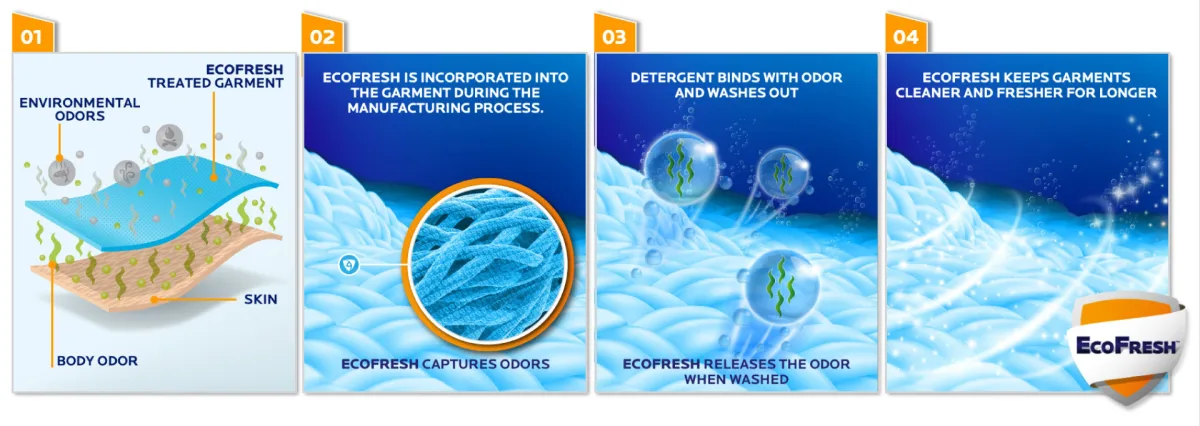
How EcoFresh odor-control technology works

Applications where broad-spectrum odor control can add value
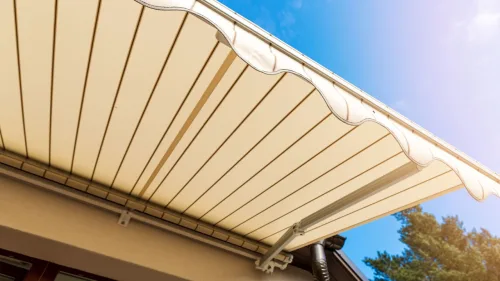
Awnings and shade structures, which are routinely exposed to changing weather conditions, moisture, airborne pollutants, and seasonal storage
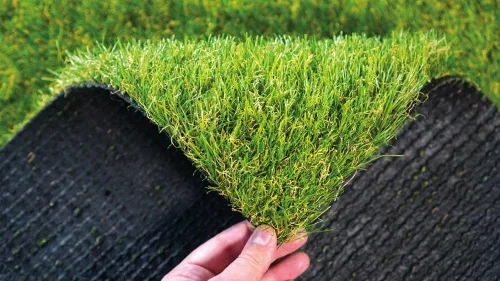
Artificial grass and landscape applications, where exposure to pets, organic matter, standing water, and outdoor contaminants can contribute to persistent odors.
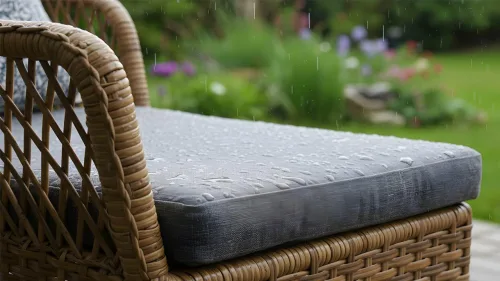
Outdoor and garden furniture, where cushions and upholstery fabrics are subjected to humidity, rain, condensation, and everyday use throughout the season.

Marine and boating textiles, including seating, covers, and upholstery, which operate in high-moisture environments and may encounter odors associated with water exposure, fish, and confined storage conditions.
For manufacturers operating in these sectors, combining moisture management with broad-spectrum odor control can help support freshness, product longevity, and a more durable end-user experience.
FREQUENTLY ASKED QUESTIONS
Can odor control and water repellent finishes be used together?
Yes. EcoFresh odor-control technology by Microban is fully compatible with wicking and water-repellent technologies, enabling seamless integration across a wide range of end-use products.
How does EcoFresh odor-control technology work?
Applied during the manufacturing process, EcoFresh is a non-ionic solution that creates a protective finish on fabrics, attracting and trapping odor molecules to help prevent textiles from emitting a wide range of unpleasant smells during wear and between washes. During laundering, the trapped odors are released and rinsed away, helping fabrics stay fresher for longer.
Is EcoFresh odor-control technology mill-friendly?
Yes. It can be easily incorporated into existing manufacturing processes through exhaust, padding and spray applications
What is the difference between odor control and antimicrobial finishes for textiles?
Antimicrobial textile finishes help control the growth of odor-causing bacteria on treated materials, whereas odor-control technologies target odor molecules directly. As a result, odor-control technologies can help reduce a broader range of odors, including those that are not caused by microbial growth.