



Understanding antimicrobial flooring
Microbial growth is a constant challenge in commercial spaces. Left unchecked, it leads to staining, persistent odors, and premature material breakdown.
Solutions with integrated antimicrobial technology are engineered to address this at the source, protecting the material itself rather than relying on surface-level treatments.
Built-in antimicrobial protection becomes a permanent flooring feature. This enables continuous resistance to bacterial, mold, and mildew growth, which can compromise performance and perceived cleanliness.
How antimicrobial technology enhances common commercial flooring materials
Performance is not defined by material type alone. It depends on whether protection is engineered into the product during manufacturing.
When integrated at this level, antimicrobial technology helps preserve appearance, structural integrity, and long-term durability across a wide range of flooring systems.
Vinyl Flooring
Widely specified in healthcare and education, vinyl is valued for its resilience and seamless installation. Integrated antimicrobial protection helps limit staining and odor at the source, enabling surfaces to stay cleaner and perform longer in high-moisture, high-traffic environments.
Ceramic Tile Flooring
Ceramic offers strong moisture resistance and easy cleaning, but grout lines remain vulnerable to microbial buildup. Effective installation with antimicrobial grout is essential to minimize long-term risk.
Antimicrobial Epoxy Flooring
Epoxy systems create seamless, non-porous surfaces suited to hygiene-critical environments. Built-in antimicrobial technology helps protect against microbial-driven degradation, even under aggressive cleaning and chemical exposure.
Laminate Flooring
Often chosen for aesthetics in light commercial spaces, laminate can benefit from antimicrobial integration to preserve surface quality.
The critical factor is not the material itself, but whether protection is engineered into it to last for the lifetime of the product.

Where antimicrobial flooring delivers the most value
Microbial impact on flooring is consistent across flooring systems, but the consequences vary by environment.

Healthcare: Healthcare settings place continuous stress on flooring, exposing surfaces to microbial contamination from patient activity, clinical procedures, and constant foot traffic. Microbial growth doesn’t just affect cleanliness perception; it degrades materials over time and reduces the effectiveness of cleaning protocols. Seamless flooring systems such as vinyl or epoxy, enhanced with built-in antimicrobial surface protection, help protect the material, minimize harborage points, and support long-term compliance with hospital-grade flooring requirements.
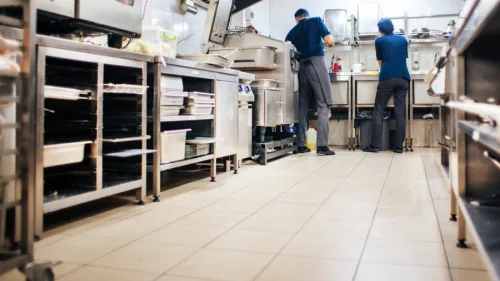
Food service and processing: Commercial kitchen environments push flooring to its limits, exposing antimicrobial floors to constant moisture, organic contamination, and aggressive washdowns. Microbial growth doesn’t just sit on the surface; it drives material breakdown, accelerates wear, and creates persistent odor issues that impact performance and perception. Seamless, non-porous antimicrobial surfaces help protect the material, extend durability, and maintain performance under demanding conditions.
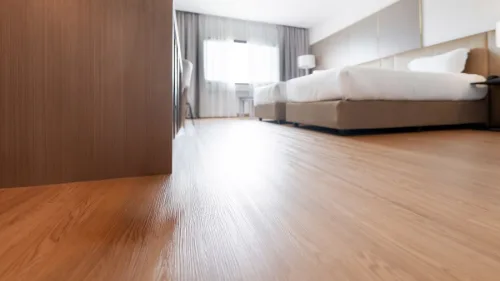
Hospitality settings: In hospitality environments, appearance shapes perception. Staining and odor caused by microbial growth can quickly undermine guest experience.
Flooring with built-in antimicrobial protection help maintain a cleaner, fresher look in high-traffic areas.

Gyms and leisure environments: Fitness environments expose surfaces to sweat, moisture, and constant use. Materials such as rubber flooring can trap moisture, creating ideal conditions for odor-causing microbes.
Integrated antimicrobial protection helps control odor at the source, preserve material integrity, and improve the overall user experience.
Why manufacturers choose Microban antimicrobial technology
Manufacturers are under increasing pressure to deliver products that perform longer and stand out in competitive specifications.
Microban antimicrobial technology enables:
- Clear product differentiation in competitive markets
- Stronger alignment with healthcare and hygiene-driven specifications
- Greater confidence in long-term product durability
In high-demand environments, antimicrobial flooring protection is shifting from a differentiator to an expectation.