
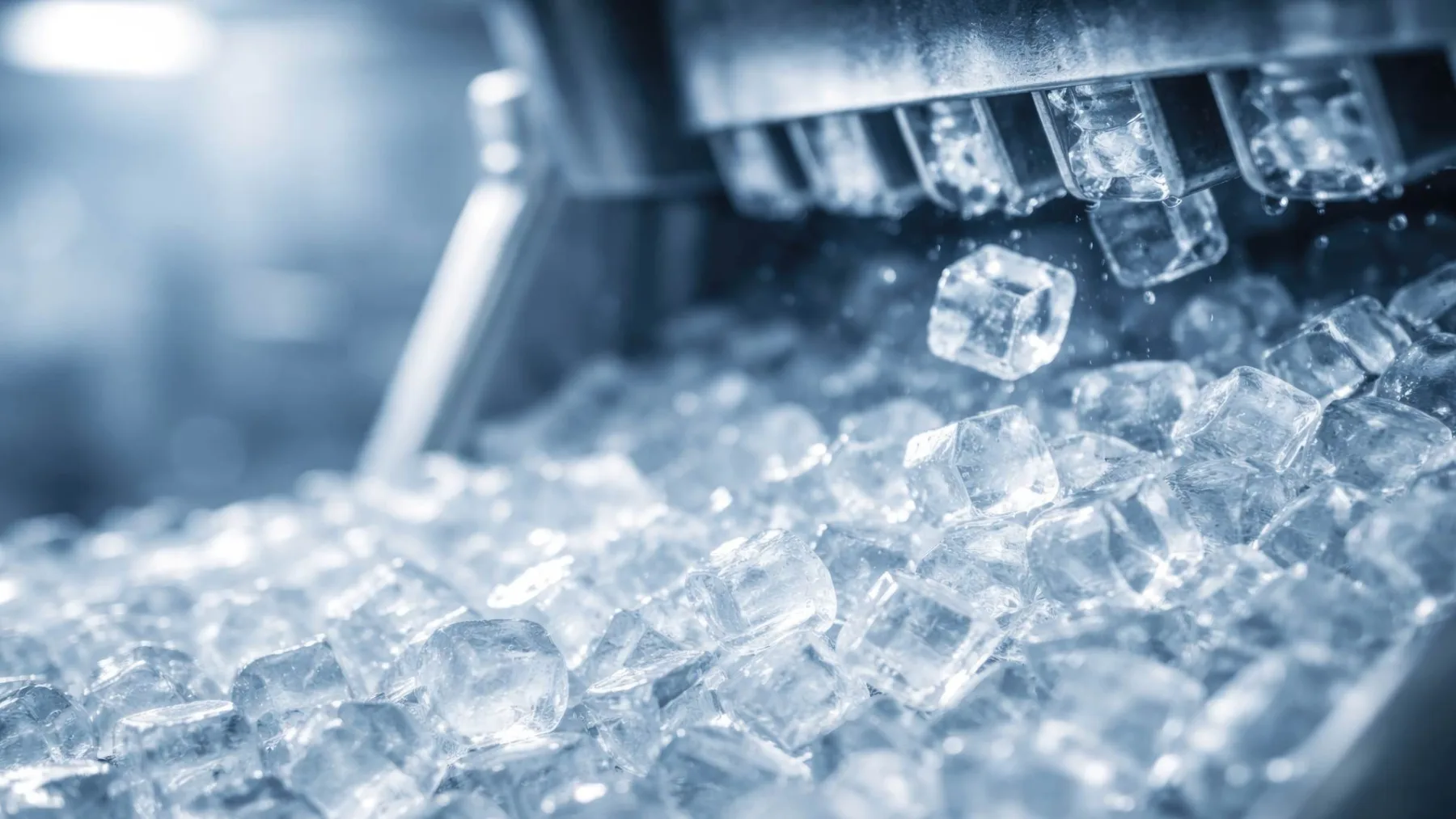
Commercial ice machines have an awkward job. They operate around water, moisture and frequent use, often in environments where cleaning access can be difficult.
For manufacturers, that makes microbial growth on internal components more than a maintenance consideration. It can affect how a machine looks, smells and performs over time.
Antimicrobial protection gives manufacturers another way to address the problem. Integrating the technology into selected components during manufacture can help inhibit microbial growth on treated surfaces between routine cleans.
Explore how antimicrobial protection can enhance product quality and add value to your commercial ice machine range.

How manufacturers can integrate antimicrobial protection into ice machine components
Antimicrobial protection works best when it is considered during product development rather than added as an afterthought.
Microban works with manufacturers to identify where microbial growth is most likely to become a problem and which components are suitable for treatment.
Depending on the machine design and materials involved, potential applications can include water-contact and non-water-contact components, internal plastic parts, liners, housings and other susceptible surfaces.
The technology can then be incorporated into the material during manufacturing.
The important part is selecting the right solution for the material, manufacturing process, operating environment and intended claims.
There is no useful one-size-fits-all antimicrobial additive.
A technology that performs well in one polymer or operating environment may not be appropriate for another. Compatibility, efficacy, processing conditions and regulatory requirements all need to be considered.
That is why developing antimicrobial ice machine components is as much a materials-engineering exercise as it is a microbiology one.
How antimicrobial protection can complement routine cleaning and maintenance
This distinction matters.
Antimicrobial protection does not remove the need to clean a commercial ice machine.
Operators should continue following the manufacturer's recommended cleaning, sanitization and maintenance procedures.
Instead, integrated antimicrobial surface protection provides an additional line of defense.
Routine cleaning addresses dirt, deposits, and microorganisms present at the time of cleaning. Antimicrobial technology helps inhibit microbial growth on the treated surface between those cleaning cycles.
For manufacturers looking at commercial ice machine mold, bacterial growth or biofilm concerns, this layered approach is more useful than positioning antimicrobial technology as a replacement for good maintenance.
Think of it as designing protection into the product while keeping established cleaning practices firmly in place.
The result is a clearer proposition for operators: maintain the machine as recommended, while selected components have additional built-in protection working in the background.
How Microban antimicrobial surface protection can add commercial value

For an OEM, the question is rarely just, “Does the technology work?”
It is also, “Does it give customers a reason to choose our machine?”
Microban antimicrobial surface protection can help manufacturers turn an otherwise hidden product feature into a more tangible differentiator.
It can support conversations around product quality, component protection and easier management of microbial growth on treated surfaces. That becomes particularly valuable in a category where competing machines can appear remarkably similar on a specification sheet.
When supported by appropriate claims, testing and communication, Microban antimicrobial surface protection can help manufacturers:
- differentiate products in a competitive commercial appliance market
- strengthen the product story around protected components
- support product quality and appearance
- give sales teams an additional benefit to communicate
- create a visible point of distinction for distributors and end users